First Steps After Storm Damage: Photos, Tarps and Receipts
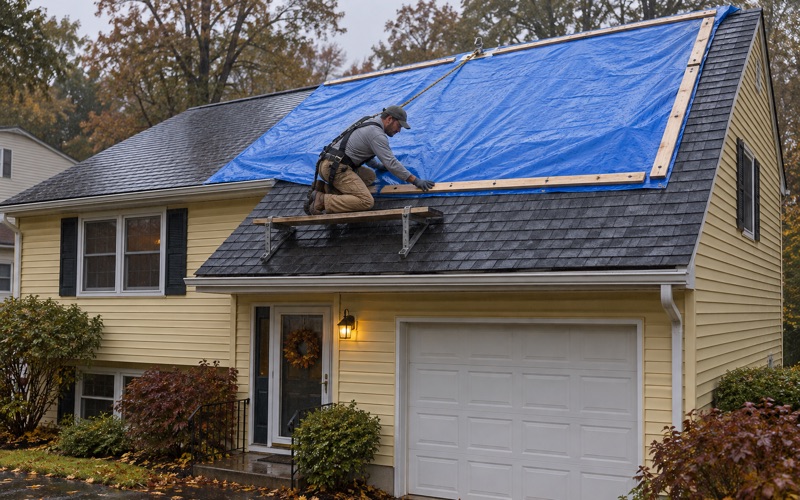
Photograph the damage from the ground and inside the house before anything is moved, then stop more water from getting in. Keep every receipt for tarps and emergency repairs, since a homeowners policy generally expects you to protect the property from further damage. Our crew photographs and writes up the damage for your own claim and tarps the roof the same day.
A Tree or Large Limb on the Roof: The First Hour
Get everyone out of the rooms under the impact, stay well clear of downed wires and call the utility if lines are involved. Do not climb onto the roof or cut the limb yourself, because its weight may be the only thing holding a broken rafter in place. We coordinate with the tree crew, then tarp the opening and check the framing below.
How a Homeowners Roof Claim Works in New Jersey
You report the loss to your insurer, the insurer sends an adjuster to inspect, and the claim is paid according to your coverage and deductible. The Department of Banking and Insurance publishes storm claim guidance for New Jersey homeowners, and DOBI Bulletin 11-16 addresses when a hurricane deductible applies. We document the damage and can meet the adjuster on site when you ask.
Wear and Tear Versus Storm Damage
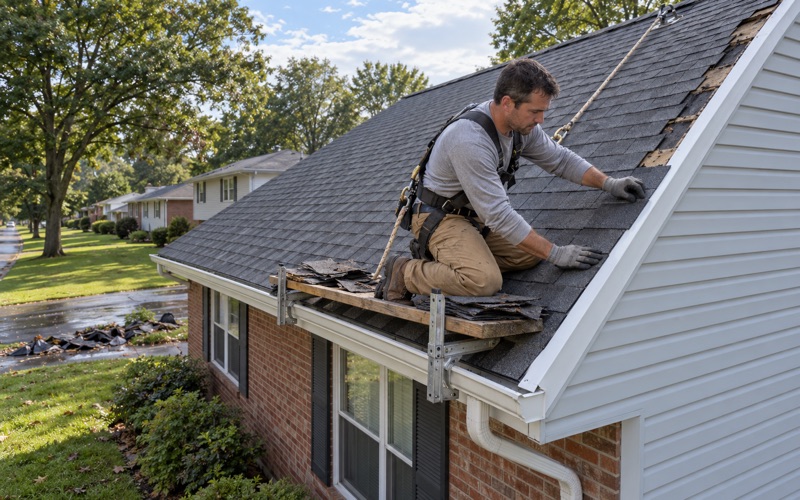
Homeowners policies generally cover sudden damage, such as shingles torn off by wind or a limb through the deck, and not gradual wear like granule loss, curling or old flashing that finally let go. That line is the most common reason a roof claim gets denied. Our write-up separates storm damage from age-related wear, so your claim rests on what the photos actually show.
Public Adjusters: Who Can Negotiate Your Claim
Under New Jersey’s Public Adjusters’ Licensing Act, N.J.S.A. 17:22B, only a licensed public adjuster may negotiate a claim for pay on a homeowner’s behalf. A roofing contractor may not. We document damage, price the repair and meet the adjuster when asked, but the claim stays yours, or your public adjuster’s, to negotiate.
New Jersey Sales Tax on a New Roof Versus a Repair
In New Jersey, a full roof replacement can qualify as an exempt capital improvement, documented with Form ST-8, the Certificate of Exempt Capital Improvement. A repair is generally treated as a taxable service. We tell you at the estimate stage which treatment your job is likely to get, so the tax line on the invoice is not a surprise.
What a Roof Replacement Costs and What Moves the Price
Roof replacement prices depend on size, pitch, the number of layers coming off, the amount of rotted decking, the material chosen and how much flashing, ventilation and gutter work is included. A steep, cut-up roof with dormers and a chimney costs more per square than a simple ranch gable. Our line-item estimate shows where every dollar goes.
Will Insurance Cover a 20-Year-Old Roof?
Age alone does not decide a claim; the policy wording and the cause of damage do. An older roof with clear storm damage may still be covered, sometimes on an actual cash value basis that subtracts depreciation, while an old roof failing from wear will not be. Check your declarations page for roof-age or depreciation terms, and keep a recent inspection report on file.
Roof Inspections for an Insurance Renewal or a Home Sale
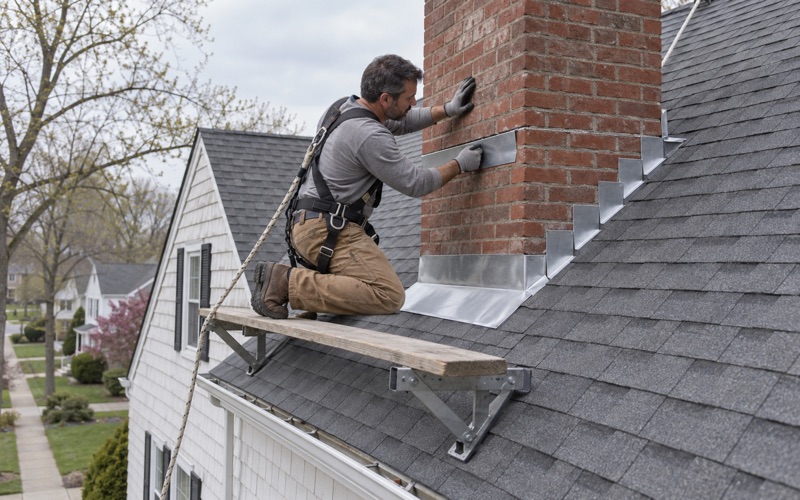
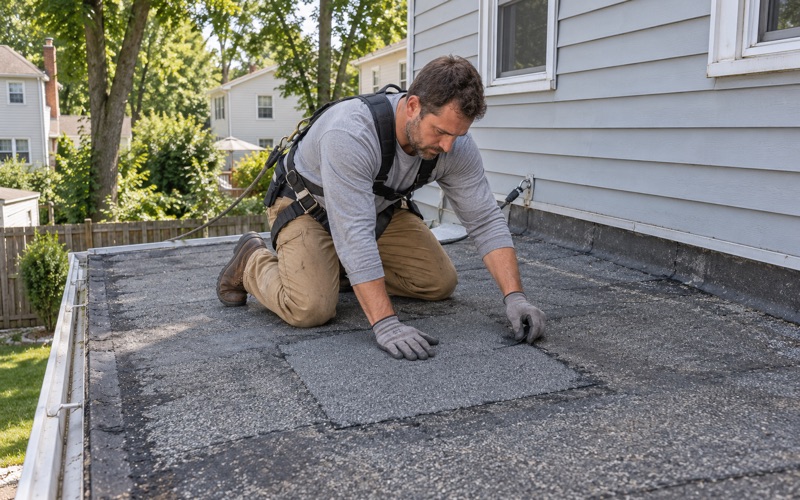
Some insurers ask for a roof inspection or photos at renewal, and most buyers want one before closing. Our inspection covers shingle condition, flashing, penetrations, ventilation, decking visible from the attic and gutters, and it comes in writing with photos. That report gives you something concrete to hand an underwriter or a buyer’s inspector.
The 25 Percent Rule Is Florida’s, Not New Jersey’s
Many roofing websites quote a 25 percent rule, under which repairing more than a quarter of a roof forces the whole roof up to current code. That rule comes from the Florida Building Code, section 706.1.1 of its existing-building volume. New Jersey’s re-roofing rules sit in the Uniform Construction Code and its rehabilitation subcode, so a repair here is judged on its own terms.
Roofing License or Registration: What New Jersey Requires
New Jersey does not yet issue a state roofing license, because no licensing rules have been adopted. What applies today is home improvement contractor registration under the Contractors’ Business Registration Act, which covers contractors doing residential work. Ask any roofer for that registration number before you sign anything.
If a Roofer Is Hurt on Your Roof
Federal OSHA rules require fall protection for residential roofing work at 6 feet and above, and accidents still happen. If a worker is hurt on your property, the contractor’s workers’ compensation and liability insurance should respond, not your homeowners policy. Ask for current certificates for both before any work starts, and check the dates on them.